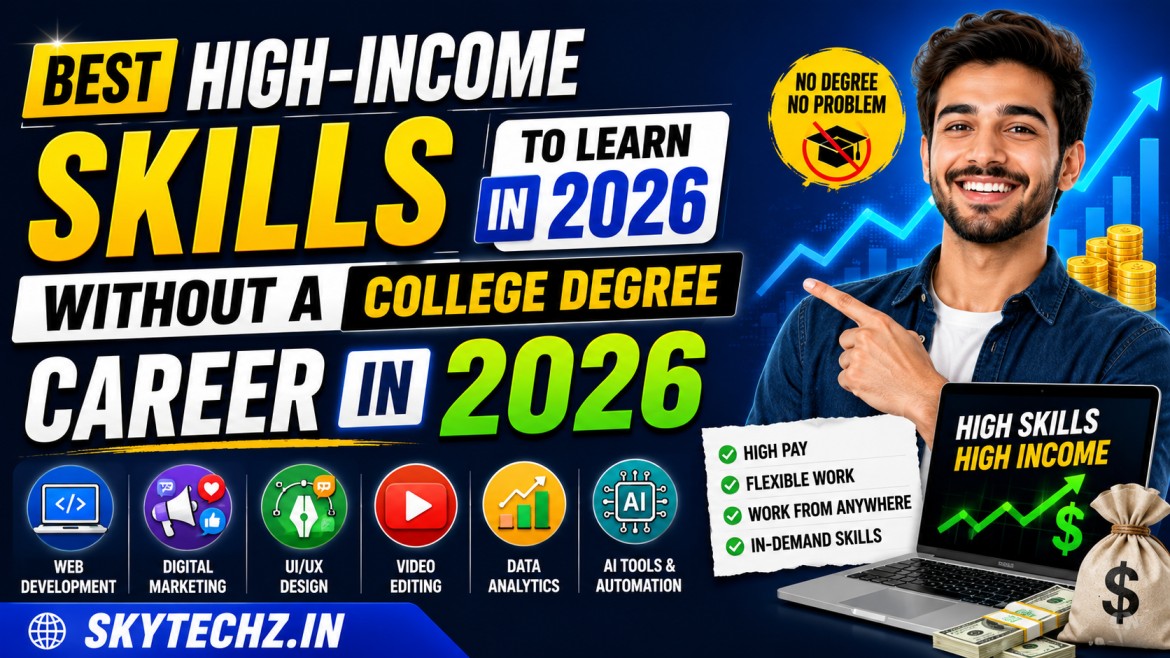
The job market is changing faster than ever before. While a college degree remains valuable for many professions, it is no longer the only path to a successful career. Today, companies are increasingly looking for people with practical skills, problem-solving abilities, and the willingness to learn.
Many professionals have built rewarding careers without following a traditional university route. By mastering in-demand skills, they work as freelancers, remote employees, entrepreneurs, or specialists in growing industries.
Whether you’re a student, job seeker, career changer, or someone looking to increase your income, learning the right skills can create exciting opportunities.
In this guide, you’ll discover the best high-income skills to learn in 2026 and understand how they can help you build a future-ready career.
Why Skills Matter More Than Ever
Technology is transforming industries across the world. Automation, artificial intelligence, and digital business models have changed what employers expect from job candidates.
Instead of focusing only on academic qualifications, many companies now prioritize people who can demonstrate practical abilities and solve real-world problems.
For example, a skilled web developer with a strong portfolio may receive job offers even without a traditional computer science degree. Similarly, experienced digital marketers, graphic designers, and video editors often build successful careers based on their work rather than formal qualifications.
This doesn’t mean education is unimportant—it means continuous learning and practical experience are becoming equally valuable.
Benefits of Learning High-Income Skills
Investing time in learning practical skills can provide long-term advantages.
Better Career Opportunities
Many industries actively recruit skilled professionals regardless of whether they hold a traditional degree.
Flexible Work Options
Several digital skills allow people to work remotely, freelance, or even start their own businesses.
Higher Earning Potential
Specialized skills often command better salaries because employers value expertise that solves business problems.
Continuous Career Growth
Technology continues to evolve, creating opportunities for those who update their skills regularly.
Greater Independence
Learning valuable skills allows you to create multiple income streams instead of relying on a single employer.
How to Choose the Right Skill
Before investing time in learning something new, consider the following:
- Does the skill genuinely interest you?
- Is there long-term demand for it?
- Can you practice it regularly?
- Does it match your career goals?
- Can you build a portfolio to demonstrate your abilities?
Choosing a skill that aligns with both your interests and market demand increases your chances of long-term success.
1. Artificial Intelligence (AI) Skills
Artificial Intelligence is influencing almost every industry, including healthcare, finance, education, manufacturing, retail, and customer service.
You don’t need to become an AI researcher to benefit from this trend. Many professionals now use AI tools to improve productivity and automate routine tasks.
Skills You Can Learn
- AI fundamentals
- Prompt writing
- AI productivity tools
- Workflow automation
- AI content assistance
- Responsible AI usage
Career Opportunities
- AI Specialist
- AI Trainer
- Prompt Engineer
- AI Consultant
- Automation Specialist
Understanding AI can also improve your performance in many existing professions.
2. Digital Marketing
Digital marketing remains one of the most valuable career skills because businesses depend on online visibility to attract customers.
Skills You’ll Learn
- Search Engine Optimization (SEO)
- Content Marketing
- Social Media Marketing
- Email Marketing
- Paid Advertising
- Marketing Analytics
Career Opportunities
- Digital Marketing Executive
- SEO Specialist
- Content Strategist
- Social Media Manager
- Freelance Digital Marketer
Digital marketing is suitable for students, freelancers, entrepreneurs, and professionals looking for flexible work opportunities.
3. Web Development
Every modern business needs a professional website, making web development one of the most in-demand technical skills.
Skills You’ll Learn
- HTML
- CSS
- JavaScript
- Responsive Design
- Website Deployment
- Basic Back-End Development
Career Opportunities
- Front-End Developer
- Full-Stack Developer
- Website Designer
- Freelance Web Developer
- WordPress Developer
Building a portfolio of websites can significantly improve your employment prospects.
4. Copywriting
Copywriting involves writing persuasive content that encourages readers to take action, such as purchasing a product, subscribing to a newsletter, or requesting a service.
Businesses need skilled copywriters for websites, advertisements, emails, and social media campaigns.
Skills You’ll Learn
- Sales writing
- Content writing
- Email marketing
- Landing page writing
- Brand messaging
- SEO writing
Career Opportunities
- Copywriter
- Content Writer
- Marketing Writer
- Email Marketing Specialist
- Freelance Writer
Strong writing skills remain valuable across many industries.
5. Graphic Design
Visual communication plays an important role in branding and digital marketing.
Graphic designers create logos, social media graphics, advertisements, presentations, brochures, and other visual content.
Skills You’ll Learn
- Design Principles
- Typography
- Color Theory
- Branding
- Logo Design
- Social Media Design
Career Opportunities
- Graphic Designer
- Brand Designer
- Marketing Designer
- Freelance Designer
- Creative Executive
Creative professionals can work for agencies, companies, or independently as freelancers.
Building a Strong Portfolio
Regardless of the skill you choose, employers and clients often want to see examples of your work.
A portfolio allows you to demonstrate your abilities through real projects rather than simply listing skills on your resume.
For example:
- Web developers can showcase websites.
- Designers can display creative projects.
- Writers can publish articles.
- Digital marketers can present campaign results.
Even personal projects can become valuable portfolio pieces if they demonstrate practical knowledge.
6. Data Analytics
Data has become one of the most valuable assets for modern businesses. Companies collect information from websites, mobile apps, sales, and customer interactions to make smarter business decisions. This has created a strong demand for professionals who can analyze and interpret data.
Skills You’ll Learn
- Data visualization
- Spreadsheet analysis
- SQL basics
- Dashboard creation
- Business reporting
- Basic statistics
Career Opportunities
- Data Analyst
- Business Analyst
- Reporting Analyst
- Market Research Analyst
- Operations Analyst
Data analytics is suitable for people who enjoy solving problems and working with numbers.
7. Cybersecurity
As businesses continue moving online, protecting digital information has become a top priority. Cybersecurity professionals help prevent hacking, data breaches, and online fraud.
Skills You’ll Learn
- Network security
- Ethical hacking fundamentals
- Cyber risk management
- Security monitoring
- Password protection
- Threat detection
Career Opportunities
- Cybersecurity Analyst
- Security Consultant
- Ethical Hacker
- Information Security Specialist
- Security Operations Analyst
Cybersecurity remains one of the fastest-growing career fields worldwide.
8. Video Editing
Video content dominates social media, online education, marketing, and entertainment. Businesses, creators, and brands all need skilled video editors.
Skills You’ll Learn
- Video trimming and editing
- Color correction
- Motion graphics
- Audio enhancement
- Storytelling techniques
- Social media video optimization
Career Opportunities
- Video Editor
- Content Creator
- YouTube Editor
- Freelance Video Specialist
- Marketing Video Producer
A strong portfolio can help you attract freelance clients and full-time job opportunities.
9. UI/UX Design
Companies want websites and mobile applications that are easy to use and visually appealing. UI (User Interface) and UX (User Experience) designers help create better digital experiences.
Skills You’ll Learn
- Wireframing
- User research
- Prototyping
- Design thinking
- Mobile app design
- Usability testing
Career Opportunities
- UI Designer
- UX Designer
- Product Designer
- Interaction Designer
- Design Consultant
Demand for skilled UI/UX designers continues to grow as digital products become more important.
10. Cloud Computing
Cloud technology allows businesses to store data and run applications over the internet instead of relying on local servers.
Skills You’ll Learn
- Cloud fundamentals
- Cloud storage
- Virtual machines
- Networking basics
- Security concepts
- Cloud deployment
Career Opportunities
- Cloud Engineer
- Cloud Administrator
- DevOps Associate
- Technical Support Engineer
Cloud computing offers excellent long-term career prospects in the IT industry.
11. Financial Skills
Understanding personal finance and business finance is valuable in almost every profession.
Important skills include:
- Budgeting
- Financial planning
- Bookkeeping
- Investment basics
- Cash flow management
- Business accounting
These skills are useful for employees, entrepreneurs, and freelancers alike.
12. Communication Skills
Strong communication often separates good professionals from outstanding ones.
Skills to Develop
- Public speaking
- Business communication
- Email writing
- Negotiation
- Presentation skills
- Team collaboration
Regardless of your profession, effective communication improves workplace performance and career growth.
How to Earn Money From These Skills
Learning a valuable skill is only the beginning. The next step is turning that knowledge into income.
Full-Time Employment
Many companies hire professionals with practical skills and strong portfolios, even if they don’t have traditional degrees in related fields.
Freelancing
Freelancing allows you to work with clients around the world while choosing your own projects and schedule.
Popular freelance services include:
- Website development
- Graphic design
- Content writing
- Video editing
- SEO
- Digital marketing
Starting a Business
Many entrepreneurs use these skills to launch agencies, consulting services, online stores, or digital products.
For example:
- A web developer can start a website design agency.
- A digital marketer can manage marketing campaigns for local businesses.
- A graphic designer can sell branding services.
- A video editor can create content for businesses and creators.
Teaching Others
Once you’ve gained experience, you can create online courses, publish educational content, or offer coaching services.
Teaching not only generates income but also helps establish your expertise.
Tips for Learning Faster
To master any high-income skill more efficiently:
- Set clear learning goals.
- Practice consistently.
- Build personal projects.
- Learn from trusted resources.
- Join online communities.
- Ask for feedback.
- Stay updated with industry trends.
Small daily improvements often lead to significant long-term progress.
Common Mistakes to Avoid
Learning a high-income skill can create excellent career opportunities, but many people make avoidable mistakes that slow their progress. Being aware of these challenges can help you stay focused and achieve better results.
1. Trying to Learn Too Many Skills at Once
It’s tempting to learn everything, but mastering one valuable skill is far more effective than knowing a little about many different subjects.
Choose one skill, build a solid foundation, and then expand into related areas.
2. Not Practicing Regularly
Watching tutorials alone won’t make you an expert. Practical experience is essential.
If you’re learning:
- Web Development — Build websites.
- Graphic Design — Create logos and social media posts.
- Digital Marketing — Practice SEO and content creation.
- Video Editing — Edit short videos regularly.
- Data Analytics — Analyze sample datasets.
The more projects you complete, the more confident and skilled you’ll become.
3. Ignoring Soft Skills
Technical skills are important, but employers also value communication, teamwork, problem-solving, and professionalism.
Developing these soft skills will help you perform better in interviews, client meetings, and collaborative work environments.
4. Giving Up Too Early
Every new skill takes time to master. Progress may feel slow in the beginning, but consistent learning and practice will produce results over time.
Stay patient and keep improving one step at a time.
How to Stay Motivated While Learning
Learning independently requires discipline. These strategies can help you remain consistent:
- Set weekly learning goals.
- Create a daily study schedule.
- Track your progress.
- Celebrate small achievements.
- Join online learning communities.
- Build real-world projects.
- Keep updating your portfolio.
Consistency matters more than studying for long hours occasionally.
Frequently Asked Questions (FAQs)
Can I earn a good income without a college degree?
Yes. Many industries now value practical skills and experience alongside formal education. Professionals with strong portfolios and in-demand skills often build successful careers through employment, freelancing, or entrepreneurship.
Which high-income skill is best for beginners?
Digital Marketing, Web Development, Graphic Design, Video Editing, Artificial Intelligence fundamentals, and Communication Skills are excellent starting points because they have broad career applications and many learning resources.
How long does it take to learn a high-income skill?
The learning timeline depends on the skill, your previous experience, and how much time you dedicate each week. Many learners develop a solid foundation within a few months of consistent practice, while mastering a skill may take longer.
Do I need expensive courses?
No. Many high-quality free learning resources are available online. You can begin with free tutorials and later consider advanced paid courses if they align with your career goals.
Can I freelance after learning these skills?
Yes. Many professionals start freelancing after building a portfolio that demonstrates their abilities. Clients usually focus on the quality of your work rather than whether you have a traditional degree.
Final Thoughts
The world of work is changing rapidly, and practical skills are becoming more valuable every year. Whether your goal is to secure a better job, earn extra income, start freelancing, or launch your own business, investing in the right skills can open many new opportunities.
Success doesn’t happen overnight. It comes from consistent learning, regular practice, and a willingness to improve. Focus on solving real problems, building practical experience, and creating a portfolio that showcases your work.
Remember, your skills are an investment that can continue creating value throughout your career.
Conclusion
A college degree can be valuable, but it is no longer the only path to professional success. High-income skills such as Artificial Intelligence, Digital Marketing, Web Development, Data Analytics, Cybersecurity, Graphic Design, and Video Editing are creating exciting opportunities for people from different educational backgrounds.
Choose one skill that matches your interests and career goals, dedicate time to learning it, and apply your knowledge through practical projects. Over time, your expertise can lead to rewarding employment, freelance work, business opportunities, and long-term financial growth.
The most important step is to begin. Every expert was once a beginner, and the skills you develop today can shape your future tomorrow.