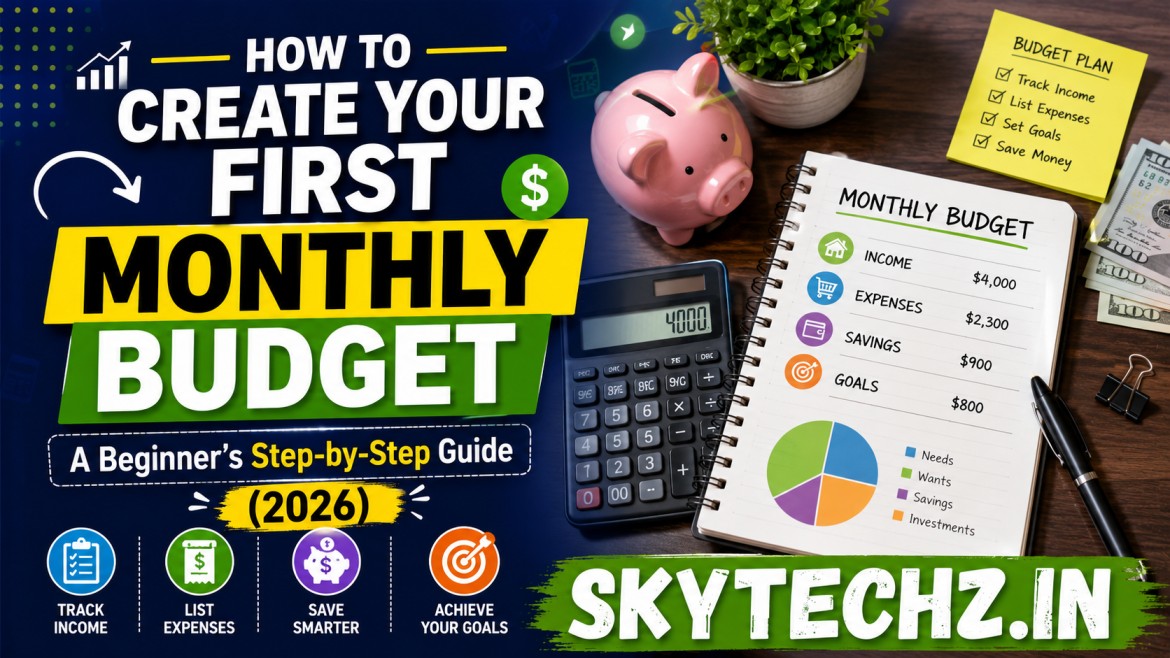
Managing your money doesn’t have to be difficult. Whether you’re a student, a first-time employee, a freelancer, or someone looking to improve your financial habits, creating a monthly budget is one of the smartest decisions you can make.
A monthly budget is simply a plan for your income and expenses. Instead of wondering where your money went at the end of each month, a budget helps you decide where your money should go before you spend it.
Many people believe budgeting means giving up everything they enjoy. In reality, a good budget allows you to spend with confidence because you know your essential expenses are covered and your financial goals remain on track.
In this guide, you’ll learn how to create your first monthly budget step by step, avoid common mistakes, and develop money management habits that can improve your financial future.
What Is a Monthly Budget?
A monthly budget is a financial plan that shows:
- How much money you earn.
- How much money you spend.
- Where your money goes.
- How much you save.
- How much you can invest in future goals.
Think of it as a roadmap for your finances. It helps you make informed decisions instead of spending without a clear plan.
A budget doesn’t need to be complicated. Even a simple notebook, spreadsheet, or budgeting app can help you stay organized.
Why Is Budgeting Important?
Many people earn a reasonable income but still struggle financially because they don’t manage their money effectively.
Creating a monthly budget offers several benefits:
Better Control Over Your Money
A budget gives you a clear picture of your financial situation, helping you make smarter decisions.
Reduced Financial Stress
Knowing that your bills, savings, and essential expenses are planned can reduce anxiety about money.
Helps You Save Regularly
Budgeting makes it easier to set aside money for emergencies, education, travel, or other long-term goals.
Prevents Overspending
When you know how much you can spend in each category, you’re less likely to make impulse purchases.
Supports Long-Term Financial Goals
Whether you’re saving for a home, starting a business, or planning further education, a budget helps you move steadily toward those goals.
Common Budgeting Mistakes Beginners Make
Before creating your first budget, it’s useful to understand the mistakes many people make.
Not Tracking Expenses
If you don’t know where your money goes, it’s difficult to improve your spending habits.
Setting Unrealistic Goals
Trying to save too much immediately can become frustrating. Start with achievable targets and increase them gradually.
Forgetting Occasional Expenses
Expenses such as birthdays, festivals, annual subscriptions, or vehicle maintenance should be included in your budget.
Ignoring Small Purchases
Daily snacks, coffee, online subscriptions, and small online purchases may seem insignificant, but together they can have a noticeable impact on your monthly budget.
Giving Up After One Mistake
No budget is perfect during the first month. Review your progress, make adjustments, and continue improving rather than abandoning the process.
Step 1: Calculate Your Monthly Income
The first step in creating a budget is knowing exactly how much money you receive each month.
Include income from:
- Salary
- Freelance work
- Business profits
- Scholarships
- Part-time jobs
- Rental income
- Side businesses
If your income changes from month to month, calculate your average monthly income based on the past several months.
Step 2: List All Your Monthly Expenses
Write down every expense you expect during the month.
Fixed Expenses
These usually remain similar every month.
Examples include:
- Rent
- Home loan payments
- Insurance
- Internet
- Mobile bills
- School or college fees
Variable Expenses
These change depending on your lifestyle and spending.
Examples include:
- Groceries
- Fuel
- Entertainment
- Shopping
- Dining out
- Electricity bills
Knowing the difference between fixed and variable expenses helps you identify areas where you can reduce spending.
Step 3: Separate Needs from Wants
One of the easiest ways to improve your budget is learning the difference between essential and non-essential spending.
Needs
- Food
- Housing
- Healthcare
- Transportation
- Utilities
- Education
- Insurance
These are necessary for daily living.
Wants
- Premium streaming subscriptions
- Designer clothing
- Frequent restaurant visits
- Expensive gadgets
- Luxury accessories
- Entertainment purchases
Reducing unnecessary spending doesn’t mean eliminating enjoyment—it simply means making thoughtful financial decisions.
Step 4: Set Monthly Savings Goals
Saving should be included in your budget from the beginning rather than waiting to see what’s left at the end of the month.
Consider saving for:
- Emergency fund
- Education
- Travel
- Home purchase
- Business ideas
- Retirement
- Family goals
Even modest monthly savings can grow significantly over time through consistent effort.
Step 5: Create Spending Limits
Assign a spending limit for each category based on your income and priorities.
Example budget categories include:
- Housing
- Utilities
- Food
- Transportation
- Healthcare
- Savings
- Education
- Entertainment
- Personal expenses
Spending limits help you stay within your budget and reduce the likelihood of overspending.
Tips for Your First Budget
If you’re budgeting for the first time:
- Keep your budget simple.
- Review it weekly.
- Record every expense.
- Be honest about your spending habits.
- Adjust categories when necessary.
- Focus on progress rather than perfection.
Budgeting is a skill that improves with practice.
Step 6: Track Every Expense
Creating a budget is only the beginning. To make it effective, you need to track where your money goes every day.
Many people are surprised to discover how much they spend on small daily purchases such as snacks, coffee, online subscriptions, or food delivery.
You can track expenses using:
- A notebook
- Microsoft Excel or Google Sheets
- A budgeting mobile app
- Your banking app
At the end of each week, review your spending and compare it with your budget. This simple habit helps you identify unnecessary expenses and stay on track.
Step 7: Reduce Unnecessary Spending
After tracking your expenses, you’ll notice areas where you can save money without affecting your quality of life.
Examples include:
- Eating out less often
- Cancelling unused subscriptions
- Buying only what you need
- Avoiding impulse shopping
- Comparing prices before purchasing
- Using public transportation when practical
Small savings every week can make a big difference over the course of a year.
Step 8: Build an Emergency Fund
A monthly budget should always include savings for unexpected situations.
An emergency fund helps you manage:
- Medical expenses
- Car repairs
- Home maintenance
- Temporary job loss
- Family emergencies
Even if you start with a small amount each month, consistency is what matters.
Keeping this money in a separate savings account can help prevent unnecessary spending.
Step 9: Review and Adjust Your Budget
Your financial situation may change from month to month.
You might receive:
- A salary increase
- Freelance income
- Bonus payments
- Higher household expenses
- New financial responsibilities
Review your budget at the end of every month and make adjustments where necessary. A flexible budget is more effective than one that never changes.
Step 10: Stay Consistent
Budgeting is a long-term habit, not a one-time task.
Don’t worry if you make mistakes during your first few months.
Instead:
- Keep tracking expenses.
- Continue saving regularly.
- Adjust spending habits.
- Improve your budget every month.
The goal is steady progress, not perfection.
Popular Budgeting Methods
Different budgeting styles work for different people. Choose one that fits your lifestyle.
1. Percentage Budget
Divide your income into categories such as:
- Essential expenses
- Savings
- Personal spending
This method is simple and easy for beginners.
2. Zero-Based Budget
Give every dollar of your income a specific purpose until all your income has been allocated.
This approach encourages intentional spending and reduces waste.
3. Pay Yourself First
Instead of saving whatever is left at the end of the month, save a fixed amount as soon as you receive your income.
Then use the remaining money for bills and other expenses.
This method helps develop consistent saving habits.
Budgeting Tips for Students
Students can improve their finances by:
- Tracking pocket money.
- Limiting unnecessary online shopping.
- Using student discounts.
- Preparing meals at home when possible.
- Saving a small amount every month.
Learning budgeting early creates strong financial habits for the future.
Budgeting Tips for Freelancers
Freelancers often have irregular monthly income.
Helpful budgeting strategies include:
- Base your budget on your average monthly income.
- Save extra earnings during busy months.
- Build a larger emergency fund.
- Separate personal and business expenses.
- Plan for taxes and business costs.
These habits can help reduce financial stress during slower periods.
Budgeting Tips for Families
Families often have multiple financial responsibilities.
A family budget should include:
- Housing
- Food
- Education
- Healthcare
- Transportation
- Insurance
- Emergency savings
- Household maintenance
Reviewing the family budget together can encourage better financial decisions and shared goals.
Simple Ways to Save More Every Month
Saving money doesn’t always require earning more.
Try these practical ideas:
- Plan your grocery shopping.
- Avoid food waste.
- Turn off unused electrical appliances.
- Buy quality products that last longer.
- Avoid unnecessary debt.
- Compare prices before making large purchases.
- Set monthly savings goals.
Small improvements can add up significantly over time.
Benefits of Following a Budget
A well-planned budget can help you:
- Reduce financial stress.
- Avoid overspending.
- Increase your savings.
- Reach financial goals faster.
- Build confidence in managing money.
- Prepare for unexpected expenses.
Budgeting isn’t about restricting yourself—it’s about making informed financial choices.