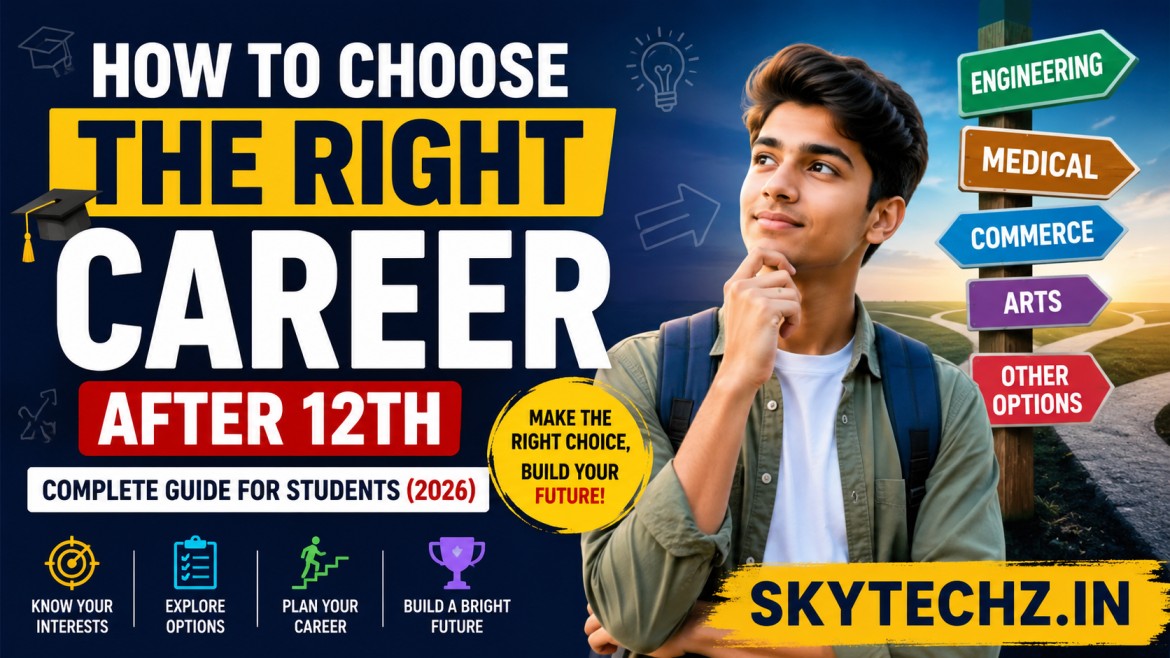
Finishing Class 12 is one of the biggest milestones in a student’s life. It marks the end of school and the beginning of a new journey filled with opportunities, challenges, and important decisions. Among all these decisions, choosing the right career is perhaps the most significant.
Many students feel confused after completing their 12th standard. Questions like “Which course should I choose?”, “What career offers the best future?”, or “Should I follow my passion or choose a high-paying job?” are common. The good news is that there isn’t just one perfect career path. With proper planning and self-awareness, you can choose a career that matches your interests, strengths, and long-term goals.
This guide will help you understand how to make an informed career decision, avoid common mistakes, and explore career opportunities across different streams.
Why Choosing the Right Career Matters
Your career influences more than just your income. It affects your lifestyle, personal growth, job satisfaction, and future opportunities.
Choosing a career based only on trends or other people’s opinions may lead to dissatisfaction later. On the other hand, selecting a career that matches your skills and interests can help you stay motivated and enjoy your work.
Some benefits of choosing the right career include:
- Better job satisfaction
- Higher motivation to learn and improve
- More opportunities for career growth
- Improved work-life balance
- Greater financial stability over time
- Increased confidence in your abilities
Remember, your first career decision doesn’t have to define your entire life. Many professionals change industries, learn new skills, or start their own businesses later in their careers.
Common Mistakes Students Make After 12th
Before choosing a course or career, it’s important to understand some of the mistakes that students often make.
1. Following Friends
Many students choose the same course as their friends simply because they don’t want to study alone. However, your interests and goals may be completely different.
A course that suits your friend may not be the best choice for you.
2. Choosing Only Based on Salary
A high salary is attractive, but it shouldn’t be the only factor in your decision.
A career that matches your skills and interests usually offers better long-term success than one chosen only for financial reasons.
3. Ignoring Personal Interests
Some students choose careers because of family expectations or social pressure.
While advice from parents and teachers is valuable, your own interests and abilities should also play an important role.
4. Not Researching Career Options
Many students know only a few traditional careers such as engineering, medicine, or law.
In reality, hundreds of career options now exist in fields like artificial intelligence, digital marketing, cybersecurity, animation, data science, renewable energy, finance, and content creation.
Exploring different options before making a decision can open doors to exciting opportunities.
Step 1: Understand Yourself
The first step in choosing the right career is understanding who you are.
Ask yourself questions like:
- Which subjects do I enjoy most?
- What activities make me feel excited?
- What skills come naturally to me?
- Do I enjoy working with people, technology, numbers, or creativity?
- Do I prefer practical work or theoretical learning?
Writing down your answers can help you identify career paths that align with your strengths.
Step 2: Identify Your Skills
Skills are just as important as academic marks.
Some students are excellent at communication, while others excel at solving problems, designing graphics, writing, coding, or managing projects.
Common skill categories include:
Technical Skills
- Computer programming
- Graphic design
- Video editing
- Data analysis
- Web development
Creative Skills
- Writing
- Photography
- Music
- Drawing
- Animation
Communication Skills
- Public speaking
- Teaching
- Customer service
- Leadership
- Negotiation
Analytical Skills
- Problem-solving
- Logical thinking
- Research
- Mathematics
- Decision-making
Knowing your strongest skills makes career planning much easier.
Step 3: Research Career Opportunities
Once you understand your interests and skills, begin exploring careers related to them.
Look beyond job titles. Research:
- Daily responsibilities
- Required education
- Future demand
- Average salary
- Career growth
- Work environment
Reliable information helps you make confident decisions instead of relying on assumptions.
Career Options After 12th Science
Students from the Science stream have access to a wide variety of career opportunities.
Engineering
Engineering remains one of the most popular choices. Specializations include:
- Computer Science
- Artificial Intelligence
- Mechanical Engineering
- Civil Engineering
- Electronics
- Electrical Engineering
- Aerospace Engineering
- Robotics
With rapid technological growth, AI, robotics, and software engineering continue to offer strong career prospects.
Medicine and Healthcare
Students interested in healthcare can explore careers such as:
- Doctor
- Dentist
- Pharmacist
- Physiotherapist
- Nurse
- Medical Laboratory Technologist
- Radiology Technician
- Public Health Professional
Healthcare remains one of the most stable and rewarding career sectors worldwide.
Data Science and Artificial Intelligence
The demand for professionals who can work with data and AI continues to grow across industries.
Career options include:
- Data Scientist
- Machine Learning Engineer
- AI Engineer
- Business Intelligence Analyst
- Data Analyst
These careers combine mathematics, programming, and problem-solving skills.
Career Options After 12th Commerce
Commerce students have many exciting opportunities beyond traditional accounting roles.
Chartered Accountancy (CA)
Chartered Accountants play an important role in auditing, taxation, financial planning, and business consulting.
The profession requires dedication but offers strong long-term career opportunities.
Bachelor of Commerce (B.Com)
A B.Com degree provides a solid foundation in accounting, finance, economics, taxation, and business management.
Graduates often continue with professional qualifications or postgraduate studies.
Bachelor of Business Administration (BBA)
BBA is ideal for students interested in business, entrepreneurship, leadership, and management.
Many graduates later pursue an MBA to further enhance their career prospects.
Financial Services
Commerce students can also explore careers in:
- Investment Banking
- Financial Analysis
- Stock Market Research
- Wealth Management
- Insurance
- Banking
- Tax Consulting
The financial sector offers opportunities in both private and public organizations.
After exploring career opportunities in Science and Commerce, let’s look at the options available for Arts students and other promising career paths that are gaining popularity in 2026.
Career Options After 12th Arts
Many students mistakenly believe that Arts offers fewer career opportunities than Science or Commerce. In reality, the Arts stream opens doors to a wide range of professions in media, law, education, design, public administration, psychology, and many other fields.
Law
If you enjoy debating, solving problems, and understanding legal systems, a career in law can be an excellent choice.
Popular career options include:
- Lawyer
- Legal Advisor
- Corporate Lawyer
- Public Prosecutor
- Judge (after qualifying through the required process)
- Legal Consultant
Law offers opportunities in both government and private sectors and can be financially rewarding with experience.
Journalism and Mass Communication
For students who enjoy writing, storytelling, photography, or public speaking, journalism is an exciting career option.
Career opportunities include:
- News Reporter
- Content Writer
- News Anchor
- Digital Journalist
- Public Relations Executive
- Social Media Manager
- Media Consultant
With digital media growing rapidly, skilled communication professionals are in high demand.
Psychology
Mental health awareness has increased significantly over the last few years, creating more career opportunities in psychology.
Students can pursue careers such as:
- Clinical Psychologist
- Counseling Psychologist
- School Counselor
- Child Psychologist
- Human Resource Specialist
This field is ideal for students who enjoy helping people and understanding human behavior.
Graphic Design and Animation
Creative students can build successful careers in design and multimedia.
Popular career options include:
- Graphic Designer
- UI/UX Designer
- Animator
- Video Editor
- Motion Graphics Artist
- Game Designer
- Digital Illustrator
As businesses continue to invest in digital marketing, skilled designers are needed across many industries.
Government Job Opportunities After 12th
Many students prefer government jobs because they offer job security, attractive salaries, and additional benefits.
Some popular options after Class 12 include:
- Staff Selection Commission (SSC) examinations
- Railway Recruitment Board (RRB) positions
- Defence services
- Police recruitment
- Postal department jobs
- State government recruitment
- Forest department positions
Preparing for competitive examinations requires discipline and consistent practice, but these careers remain highly respected.
High-Demand Careers in 2026
Technology and changing industries have created many new career opportunities. Students who develop the right skills can benefit from strong job demand in the coming years.
Artificial Intelligence
AI is transforming healthcare, finance, education, manufacturing, and many other sectors.
Popular roles include:
- AI Engineer
- Machine Learning Engineer
- AI Research Assistant
- Prompt Engineer
- AI Product Specialist
Cybersecurity
As cyber threats increase, organizations need professionals who can protect digital systems and sensitive information.
Career options include:
- Cybersecurity Analyst
- Ethical Hacker
- Security Consultant
- Network Security Engineer
- Information Security Specialist
Digital Marketing
Almost every business now has an online presence, creating strong demand for digital marketing professionals.
Career opportunities include:
- SEO Specialist
- Content Marketing Executive
- PPC Specialist
- Email Marketing Expert
- Social Media Manager
- Affiliate Marketer
This field is suitable for both full-time jobs and freelance work.
Data Analytics
Businesses rely on data to make better decisions.
Popular careers include:
- Data Analyst
- Business Analyst
- Data Visualization Specialist
- Market Research Analyst
Strong analytical and problem-solving skills are valuable in this profession.
Professional Certification Courses
A college degree is important, but professional certifications can make your resume more competitive.
Some useful certifications include:
- Digital Marketing
- Data Analytics
- Graphic Design
- Web Development
- Programming
- Cloud Computing
- Cybersecurity
- Financial Accounting
- Project Management
These certifications help students develop practical skills that employers value.
College Degree vs Skill-Based Learning
Many students wonder whether they should focus only on earning a degree or spend time building practical skills.
The best approach is to combine both.
A degree provides academic knowledge and opens doors to many professions, while practical skills improve employability and help you adapt to changing job markets.
For example:
- An engineering student can also learn programming and cloud computing.
- A commerce student can develop Excel, accounting software, and financial analysis skills.
- An arts student can learn graphic design, content writing, or digital marketing.
This combination makes candidates more competitive.
Career Planning Checklist
Before selecting a course or career, ask yourself these questions:
- What subjects do I genuinely enjoy?
- Which skills do I want to improve?
- What type of work environment suits me?
- Am I interested in higher education or entering the workforce quickly?
- Does this career have long-term growth opportunities?
- Am I choosing this path because I enjoy it or because others expect me to?
Answering these questions honestly will help you make a more confident decision.
How to Make Your Final Career Decision
After exploring different career options, the next step is making a confident decision. Remember that no career is perfect for everyone. The best choice is one that matches your interests, strengths, values, and long-term goals.
Instead of asking, “Which career pays the highest salary?”, ask yourself:
- Will I enjoy doing this work every day?
- Does this career match my skills?
- Is there good demand for this profession?
- Can I continue learning and growing in this field?
- Does it fit the lifestyle I want in the future?
Taking time to answer these questions honestly will help you make a more informed decision.
Tips for Parents
Parents play an important role in helping students choose a career. Encouragement and guidance are valuable, but it’s equally important to listen to your child’s interests and aspirations.
Here are a few suggestions:
- Encourage open conversations about career goals.
- Support your child’s strengths instead of comparing them with others.
- Explore different career options together.
- Focus on long-term happiness as well as financial stability.
- Allow students to make informed decisions rather than forcing a particular career path.
Students are more likely to succeed when they feel motivated and supported.
Tips for Students
Choosing a career can feel overwhelming, but following these simple steps can make the process easier.
- Research multiple career options before making a decision.
- Speak with teachers, career counselors, and professionals in fields you’re interested in.
- Develop practical skills alongside your academic studies.
- Keep learning through books, online courses, and workshops.
- Stay updated with industry trends and future job opportunities.
- Don’t be afraid to change direction if your interests evolve over time.
Remember, learning is a lifelong journey.
Importance of Skill Development
In today’s job market, employers value practical skills as much as academic qualifications.
Along with your degree, try to improve skills such as:
- Communication
- Critical thinking
- Problem-solving
- Digital literacy
- Teamwork
- Time management
- Leadership
- Basic financial knowledge
Learning new skills makes you more adaptable and increases your career opportunities.
Frequently Asked Questions (FAQs)
Which career is best after 12th?
There is no single best career for everyone. The right choice depends on your interests, abilities, educational background, and long-term goals. Careers in healthcare, engineering, business, technology, education, design, finance, and skilled trades all offer excellent opportunities.
Can I change my career later?
Yes. Many professionals switch careers after gaining new skills or discovering new interests. Continuous learning makes career changes more achievable than ever before.
Should I follow my passion or choose a high-paying career?
Ideally, look for a balance. A career that combines your interests with good long-term opportunities often leads to greater job satisfaction and career growth.
Are online courses useful for career development?
Yes. High-quality online courses can help you build practical skills, improve your resume, and stay updated with industry trends. They work best when combined with formal education and hands-on experience.
How important are communication skills?
Communication skills are valuable in almost every profession. Being able to express ideas clearly, work with others, and solve problems effectively can improve both career opportunities and workplace success.
Final Thoughts
Choosing a career after Class 12 is an important decision, but it doesn’t have to be stressful. Every student has unique talents, interests, and ambitions. By understanding yourself, researching different professions, and developing practical skills, you can build a career that is both meaningful and rewarding.
Avoid making decisions based only on trends or social pressure. Instead, focus on your strengths, stay curious, and continue learning throughout your life. Success is rarely determined by a single choice—it’s built through consistent effort, adaptability, and a willingness to grow.
Whether you dream of becoming an engineer, entrepreneur, teacher, designer, doctor, accountant, software developer, or business leader, the key is to start with a clear plan and remain committed to your goals.
Conclusion
The years after completing Class 12 are filled with exciting possibilities. Taking time to explore your interests, understand career opportunities, and build valuable skills will help you make informed decisions for the future.
Remember that careers evolve, industries change, and new opportunities continue to emerge. Staying flexible and committed to learning will help you succeed in an ever-changing world.
Choose a path that inspires you, work hard to develop your abilities, and never stop improving. Your future is shaped not only by the career you choose today but also by the dedication you bring to it every day.