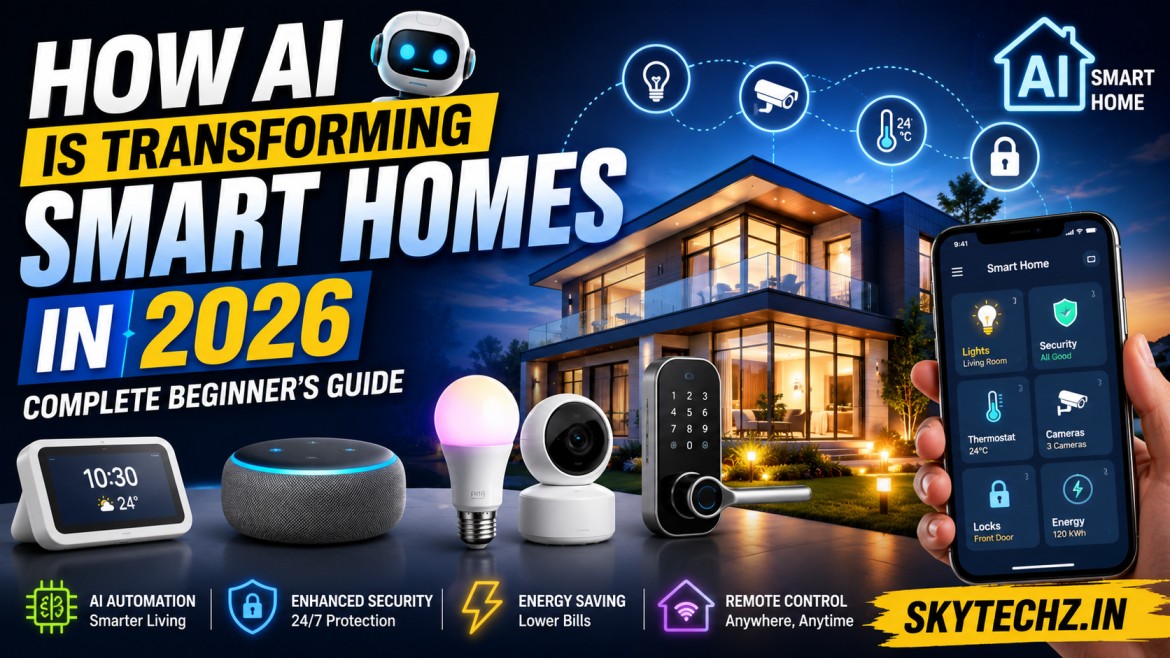
Imagine walking into your home after a long day at work. The lights switch on automatically, the air conditioner adjusts to your preferred temperature, your favorite playlist starts playing, and your coffee machine begins brewing a fresh cup—all without pressing a single button.
This isn’t science fiction anymore. It’s the reality of an AI-powered smart home.
In 2026, artificial intelligence has made smart homes more practical, affordable, and easier to use than ever before. Instead of controlling devices one by one, AI connects them into a single intelligent system that learns your habits and automates everyday tasks.
Whether you’re new to smart home technology or planning to upgrade your existing setup, this guide will explain everything you need to know in simple language.
What Is an AI Smart Home?
A smart home is a house equipped with internet-connected devices that can be monitored and controlled remotely. When artificial intelligence is added, these devices become much smarter because they can learn from your behavior and make decisions automatically.
For example, instead of manually adjusting your thermostat every evening, an AI-powered system notices that you usually arrive home at 6:30 PM. It begins cooling the room a few minutes before you arrive, creating a comfortable environment while avoiding unnecessary energy use.
Over time, the system continues learning your preferences, making your home more efficient and personalized.
How Does AI Work in a Smart Home?
Artificial intelligence combines data from connected devices, sensors, cameras, and user preferences to automate daily routines.
Here’s a simple example:
- Motion sensors detect someone entering a room.
- AI checks the time of day and the available natural light.
- The system decides whether the lights need to be switched on.
- If it’s evening, the lights turn on automatically at your preferred brightness.
- If nobody is in the room for a certain period, the lights switch off to save electricity.
These small automations make everyday life more convenient while reducing energy consumption.
Why More People Are Choosing AI Smart Homes
Smart home technology is no longer limited to technology enthusiasts. Many homeowners now choose AI-powered devices because they improve comfort, convenience, and security.
Key Benefits
1. Saves Time
Daily tasks such as switching off lights, adjusting room temperature, locking doors, and managing appliances happen automatically.
2. Improves Comfort
Your home adapts to your lifestyle instead of requiring constant manual adjustments.
3. Reduces Energy Bills
AI analyzes your energy usage and helps avoid unnecessary electricity consumption.
4. Better Home Security
Smart cameras and sensors monitor your property and send instant alerts if unusual activity is detected.
5. Remote Control
Even when you’re away, you can monitor and control your home using a smartphone.
Essential AI Smart Home Devices
Building a smart home doesn’t require replacing every appliance. Many homeowners begin with just a few AI-powered devices and expand gradually.
Here are some of the most useful options.
1. AI Smart Speakers
Smart speakers act as the central control hub for many smart homes.
Using simple voice commands, you can:
- Turn lights on or off
- Play music
- Check the weather
- Set reminders
- Control compatible smart devices
- Ask general questions
- Create shopping lists
- Manage calendars
As AI improves, these assistants understand natural conversations more accurately and provide more personalized responses.
Advantages
- Easy to set up
- Hands-free control
- Works with many smart home products
- Regular software improvements
2. AI Smart Lighting
Smart lighting is one of the easiest ways to begin creating a connected home.
Unlike traditional bulbs, AI-powered lighting systems automatically adjust brightness and color temperature based on the time of day, occupancy, or personal preferences.
Popular Features
- Voice control
- Motion activation
- Scheduling
- Automatic dimming
- Energy-saving modes
- Smartphone control
- Custom lighting scenes
For example, lights can gradually brighten in the morning to simulate sunrise or automatically dim before bedtime.
3. AI Smart Thermostats
Heating and cooling systems account for a large portion of household energy usage. AI smart thermostats help reduce costs while improving comfort.
Instead of maintaining the same temperature throughout the day, they learn your schedule and adjust automatically.
AI Features
- Learning daily routines
- Weather-based adjustments
- Remote control
- Energy reports
- Automatic scheduling
- Occupancy detection
Many homeowners notice lower electricity bills after installing an AI thermostat because it avoids heating or cooling empty rooms unnecessarily.
4. AI Robot Vacuum Cleaners
Cleaning the house becomes much easier with an AI-powered robot vacuum.
Modern models create detailed maps of your home, avoid obstacles, and remember the most efficient cleaning routes.
Features
- Smart navigation
- Room mapping
- Automatic charging
- Obstacle detection
- Scheduled cleaning
- Voice assistant integration
- Carpet recognition
- Strong suction control
These devices are especially useful for busy families, pet owners, and anyone who wants to reduce household chores.
Building Your First Smart Home
If you’re just getting started, there’s no need to purchase every smart device at once. A simple starter setup might include:
- One AI smart speaker
- Smart light bulbs in the living room
- A smart thermostat
- One indoor security camera
This basic setup already provides many of the benefits of a connected home, including automation, remote control, and improved convenience.
As your needs grow, you can add more devices such as smart door locks, robot vacuums, and smart kitchen appliances.
Beginners Should Avoid
Many first-time buyers purchase devices from different brands without checking compatibility.
Before buying any smart home product, make sure it works with your preferred smart home ecosystem. Choosing compatible devices ensures a smoother experience and makes automation much easier.
It’s also important to secure your smart home by using strong passwords, enabling two-factor authentication where available, and keeping device software updated.
5. AI Security Cameras – Smarter Home Protection
Home security has improved dramatically with the help of artificial intelligence. Traditional security cameras simply recorded video, but modern AI cameras can recognize people, vehicles, pets, and unusual movements in real time.
Instead of sending notifications for every movement, AI filters unnecessary alerts caused by rain, tree branches, or small animals. This means you only receive alerts when something important happens.
Key Features
- Human detection
- Facial recognition
- Vehicle detection
- Motion tracking
- Night vision
- Two-way audio
- Cloud and local storage
- Instant mobile notifications
Everyday Benefits
Imagine you’re at work and someone rings your doorbell. Your AI camera sends a live video feed to your smartphone, allowing you to see who’s there and even speak with the visitor remotely.
For families, AI security cameras provide extra peace of mind by helping monitor children, elderly relatives, and pets while away from home.
6. Smart Door Locks – Keyless and Secure
Losing house keys can be frustrating, but AI-powered smart locks eliminate that problem. These locks allow you to unlock your door using a smartphone, fingerprint, PIN code, or even facial recognition, depending on the model.
Popular Features
- Fingerprint unlocking
- Mobile app control
- Temporary guest access
- Auto-lock function
- Activity history
- Voice assistant integration
- Emergency backup keys
Why They’re Useful
If a family member forgets their key, you can unlock the door remotely using your smartphone. You can also create temporary access codes for guests, delivery personnel, or service providers and remove them when they’re no longer needed.
7. AI Kitchen Appliances – Smarter Cooking
The kitchen is becoming one of the smartest areas of modern homes. AI-powered appliances simplify meal preparation, reduce waste, and make cooking easier for beginners.
Examples of AI Kitchen Devices
- Smart refrigerators
- AI ovens
- Smart coffee machines
- Intelligent microwaves
- Smart dishwashers
AI Features
- Recipe suggestions
- Food expiration reminders
- Automatic cooking programs
- Voice control
- Energy optimization
- Grocery management
Some smart refrigerators can even recognize stored food items and suggest recipes based on available ingredients, helping reduce food waste.
8. AI Energy Management Systems
Electricity costs continue to rise, making energy efficiency more important than ever. AI energy management systems monitor household electricity usage and automatically optimize power consumption.
What They Can Do
- Monitor electricity usage
- Detect energy waste
- Optimize appliance schedules
- Reduce standby power consumption
- Generate energy reports
- Recommend cost-saving improvements
Real-Life Example
Instead of running your washing machine during peak electricity hours, the AI system may recommend operating it later when electricity rates are lower, helping reduce monthly utility bills.
AI Voice Assistants – The Heart of a Smart Home
Voice assistants have evolved far beyond simple question-and-answer tools. They now act as intelligent home managers, coordinating multiple devices through a single interface.
With simple voice commands, you can:
- Turn lights on or off
- Lock doors
- Start the robot vacuum
- Adjust room temperature
- Play music
- Check the weather
- Set reminders
- Control televisions and speakers
As AI improves, these assistants understand natural conversations more accurately and respond faster than previous generations.
Creating Smart Home Automation Routines
One of the biggest advantages of AI is automation. Instead of controlling devices individually, you can create routines that trigger multiple actions simultaneously.
Morning Routine
Every morning, your smart home can:
- Turn on bedroom lights gradually
- Open smart curtains
- Start the coffee machine
- Read the day’s weather forecast
- Display calendar reminders
- Play your favorite morning playlist
Everything happens automatically, making your mornings more organized and stress-free.
Leaving Home Routine
When you leave for work, a single command or automatic trigger can:
- Switch off lights
- Lock all doors
- Turn off unnecessary appliances
- Activate security cameras
- Adjust the thermostat
- Close smart blinds
This not only improves security but also helps save electricity.
Bedtime Routine
At night, AI can automatically:
- Lock doors
- Turn off lights
- Lower room temperature
- Activate outdoor security cameras
- Enable alarm systems
- Turn off entertainment devices
These routines create a safer and more comfortable home environment without requiring manual effort.
Advantages of AI Smart Homes
AI-powered homes offer many practical benefits for homeowners.
Greater Convenience
Daily tasks happen automatically, reducing the need for constant manual control.
Improved Energy Efficiency
AI helps lower electricity usage by turning off unused devices and optimizing heating and cooling schedules.
Better Security
Smart cameras, sensors, and locks provide continuous monitoring and instant alerts.
Increased Comfort
Your home adapts to your preferences, creating a more enjoyable living environment.
Accessibility
Voice-controlled devices make everyday tasks easier for older adults and people with mobility challenges.
Challenges of AI Smart Homes
While smart homes provide many advantages, there are also some challenges to consider.
Initial Cost
Building a smart home requires an upfront investment. Although prices have become more affordable, premium devices can still be expensive.
Internet Dependence
Many smart home features rely on a stable internet connection. If your network goes offline, some cloud-based functions may be temporarily unavailable.
Privacy Concerns
AI devices often collect data to improve their performance. It’s important to review privacy settings and purchase products from trusted manufacturers that provide regular security updates.
Compatibility
Not all smart devices work together seamlessly. Before purchasing new products, check that they support your preferred smart home platform to avoid integration issues.
The Future of AI Smart Homes
Artificial intelligence is changing how people interact with their homes. Over the next few years, smart home technology is expected to become even more intelligent, affordable, and easier to use. Instead of controlling individual devices, homeowners will rely on AI systems that understand routines, predict needs, and automate daily tasks with minimal input.
As AI continues to improve, smart homes will become more personalized. Your home may recognize different family members, adjust lighting based on individual preferences, recommend energy-saving settings, and even detect potential maintenance issues before they become expensive repairs.
Some experts also predict that future AI systems will communicate with each other more effectively, allowing appliances, lighting, security systems, and entertainment devices to work together seamlessly.
How to Choose the Right Smart Home Devices
If you’re planning to build a smart home, buying every available gadget isn’t necessary. The best approach is to start with devices that solve real problems and fit your lifestyle.
Before making a purchase, consider these factors:
1. Compatibility
Choose devices that work well together. Using products designed for the same smart home ecosystem makes setup easier and allows you to create more advanced automation routines.
2. Security Features
Look for products that receive regular software updates and include strong security options such as encrypted communication, secure user accounts, and two-factor authentication where available.
3. Ease of Use
A smart home should simplify your life—not make it more complicated. Choose devices with easy installation, intuitive mobile apps, and clear user instructions.
4. Energy Efficiency
Many AI devices help reduce electricity consumption. Look for products that include energy monitoring and automatic power-saving features to lower your monthly utility bills.
5. Expandability
Start with a few devices and choose products that allow you to add more components in the future without replacing your existing setup.
Smart Home Tips for Beginners
If you’re building your first smart home, these practical tips can help you avoid common mistakes:
- Begin with one or two essential devices instead of purchasing everything at once.
- Use a strong Wi-Fi network to ensure reliable connections.
- Keep all devices updated with the latest software.
- Use unique passwords for your smart home accounts.
- Review privacy settings before enabling cloud features.
- Create simple automation routines first, then expand as you become more familiar with the system.
Taking a gradual approach makes the transition to a smart home easier and more affordable.
Common Myths About AI Smart Homes
Myth 1: Smart Homes Are Only for Luxury Houses
This is no longer true. Affordable smart speakers, bulbs, plugs, and cameras have made smart home technology accessible to many households.
Myth 2: AI Replaces Human Control
AI is designed to assist you, not replace your decisions. You can still control your devices manually whenever you want.
Myth 3: Smart Homes Are Difficult to Install
Many modern devices are designed for beginners and can be installed in just a few minutes using a smartphone app.
Myth 4: AI Devices Always Listen to Conversations
Most voice assistants activate only after hearing a designated wake word. Many devices also include microphone mute options and privacy controls that allow users to manage how their data is handled.
Frequently Asked Questions (FAQs)
What is an AI smart home?
An AI smart home uses internet-connected devices and artificial intelligence to automate everyday tasks such as lighting, heating, security, and appliance control. The system learns from your habits and helps make your home more convenient and energy-efficient.
Is building a smart home expensive?
Not necessarily. You can start with affordable devices such as smart bulbs, smart plugs, or a smart speaker and gradually expand your setup over time.
Do smart homes save electricity?
Yes. AI-powered thermostats, lighting systems, and energy management tools can reduce unnecessary electricity usage by automatically adjusting settings based on occupancy and daily routines.
Are AI smart homes secure?
Smart home devices from trusted manufacturers generally include encryption and regular software updates. To improve security, use strong passwords, enable two-factor authentication when available, and keep all devices updated.
Can I control my smart home while traveling?
Yes. Most smart home devices include mobile apps that let you monitor cameras, adjust lighting, control appliances, and receive security alerts from anywhere with an internet connection.
Conclusion
AI smart homes are no longer a concept of the future—they are becoming part of everyday life. With advances in voice assistants, intelligent security systems, smart appliances, and energy management, homeowners can enjoy greater convenience while reducing costs and improving home safety.
Choosing compatible devices, maintaining strong security practices, and focusing on products that solve real problems will help you build a smart home that continues to deliver value for years to come.
As artificial intelligence becomes more advanced, smart homes will play an even bigger role in creating safer, more efficient, and more comfortable living spaces.